Building AI-Enabled Green Economy Ecosystems: HCSREL Convened Global Dialogue on Youth and Sustainable Enterprise
· green-economy, sustainability, AI, youth, sustainable-enterprise, rubanomics, NTU
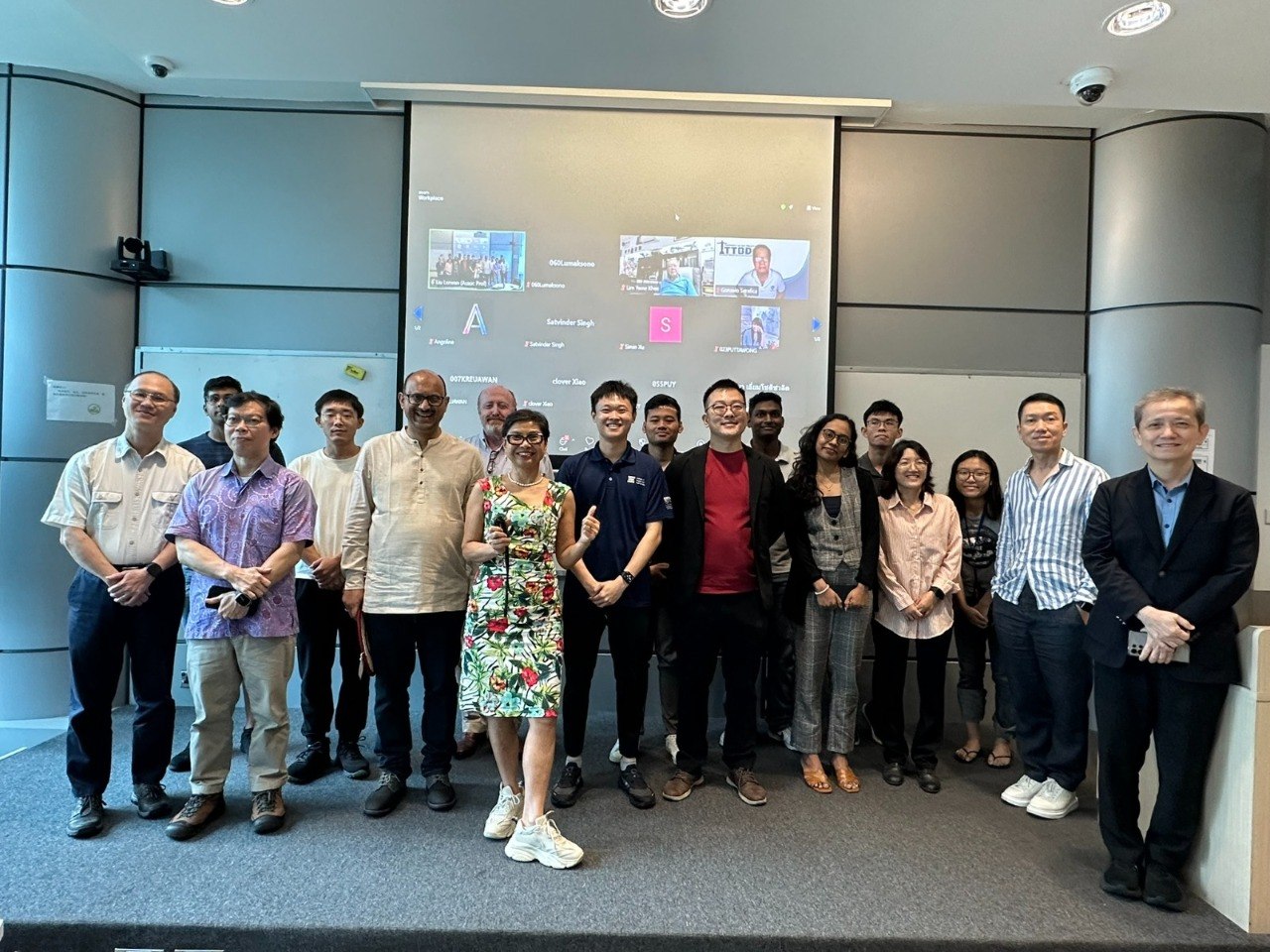
Research Techno Plaza, NTU Singapore, 18 May 2026 — The Human Centered Sustainability Research and Education Lab (HCSREL) at Nanyang Technological University (NTU) hosted Youth, AI & Sustainable Enterprise, a hybrid collaborative forum bringing together global voices on sustainability, economics, and innovation.
Professor Liu Lerwen, Director of HCSREL, opened the forum by introducing the concept of a green economy and outlining the lab's mission to empower people and harness AI for good. She raised the central question that anchored the day's discussions: How can villages become hubs of AI-enabled green economy entrepreneurship?
Her vision was equally compelling: to build AI-enabled village innovation ecosystems, nurture green economy enterprises rooted in local communities, and cultivate a new generation of regenerative entrepreneurs. Five speakers from diverse fields shared their work on sustainable development, robotics economics, and clean technology. Their contributions collectively showed that the green economy is not only an environmental imperative, but also a powerful driver of human prosperity.
Following the opening speech, Mr. Madan Padaki, Founder of Rubanomics Global Forum based in Bangalore, presented his framework of “Robonomics”, a model combining governance, aspirations, potential, and entrepreneurship to create sustainable economic opportunities in rural India. Supported by the Shell Foundation, his initiative focuses on creating green supply chains through AI-powered platforms and establishing village-based centres called “cafes” to help farmers access sustainable products and services.
A key insight from his talk was the importance of reframing green initiatives around economic livelihood, making sustainability something communities can see and feel in daily life rather than only as an environmental benefit. Mr. Padaki aims to pilot projects in North Karnataka districts, establishing at least 10 village cafes, with at least five led by women within the next six months. Future work will explore business models such as EV rentals, EV charging infrastructure, solar rooftops, and cold storage units supported by AI-powered platforms and trusted local networks.
Mr. Fook Yen Chong, Principal Social Sector Specialist at the Asian Development Bank (ADB), discussed financing opportunities for education, agriculture, and rural infrastructure in developing countries such as India and Thailand. Drawing on examples such as the Karnataka Higher Education Transformation Project in India and the Smarter Agriculture Thai Initiative (SATI) in Thailand, he emphasized the importance of addressing foundational challenges in higher education, from faculty capacity to curriculum relevance, while also exploring emerging opportunities in semiconductor technology and AI development.
Mr. Ambrose Chia, MD 144 Ventures of Leave a Nest, presented the “hyperdisciplinary approach”, a global knowledge-sharing initiative that connects researchers, businesses, and governments. Founded in 2002 by 15 graduate students in science and technology, Leave a Nest operates across four pillars: Education, Human, Research, and Frontier Development, with Singapore serving as a central hub for global knowledge exchange. Its E0 programme, which focuses on turning passion into entrepreneurship, was highlighted as a model with strong potential for expansion beyond Japan into Singapore and Southeast Asia.
Mr. Jovan Tan, Director of NUS’s Sustainability Action and Innovation Lab (SAIL), shared insights on circularity and sustainability projects, including waste valorisation, recycling initiatives, and carbon capture technologies. He emphasized that advocacy alone is not sufficient for driving real change, highlighting the need for engineering solutions and innovation to address sustainability challenges.
Mr. Kevin Leung described the National GRIP Programme, which supports the translation of scientific research into real-world startup ventures, while Mr. Eng Hann L., Deputy Programme Director of the Singapore Agri-Food Innovation Lab, discussed the lab’s role in connecting corporate members with solution providers for global scaling.
Across all discussions, a common goal emerged: meaningful progress on sustainability requires coordinated action across technology, finance, governance, and entrepreneurship.
The forum reaffirmed HCSREL's belief that human prosperity and a thriving planet are not competing goals — they are one and the same, and building the ecosystems that unite them is the work of our time.