Driving Circular Innovation: Prof. Lerwen LIU Shares Taiwan's Success at SEA-MaP 2nd Innovation Expo
· Circular Economy, Innovation, Policy Intervention, Plastic Pollution, Recycling, EPR, Green Design, Miniwiz, ASEAN, Sustainability, Waste Management, Environmental Education, Economic Development
Driving Circular Innovation: Taiwan's Success at SEA-MaP 2nd Innovation Expo
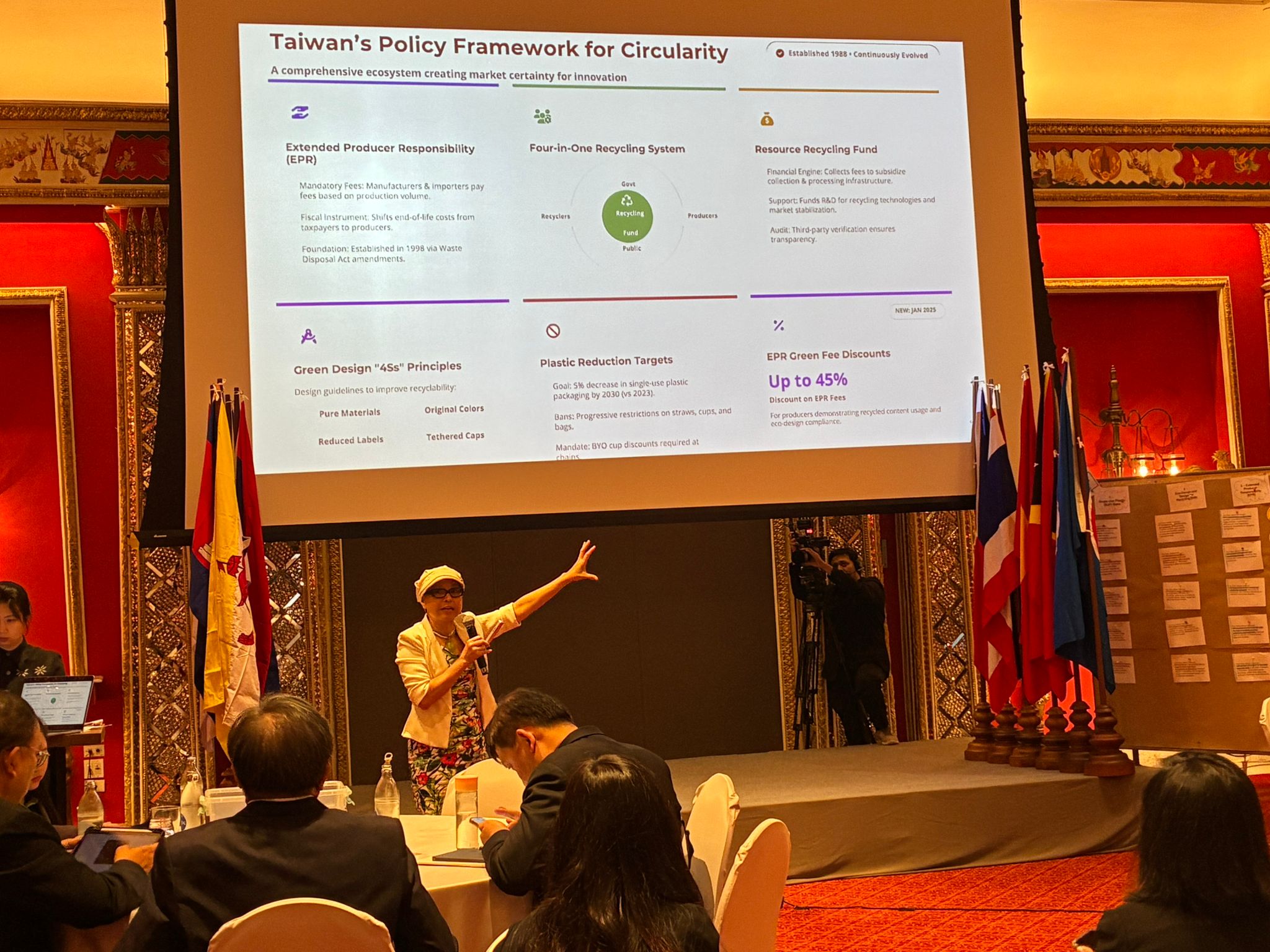
At the recent SEA-MaP 2nd Innovation Expo in Bangkok, Professor Lerwen LIU presented a compelling case study on Taiwan's remarkable transformation from a "garbage island" to a global leader in circular innovation. Her insights, featuring the pioneering work of Miniwiz, showcased how strategic policy engineering can cultivate a thriving circular economy.## Taiwan's Journey to Circular LeadershipOver three decades, Taiwan has achieved a national recycling rate of 55%, comparable to top-tier nations like Germany and Austria. This success is underpinned by a drastic reduction in daily waste per person, from 1.14 kg/person/day in 1997 to 0.40 kg/person/day in 2011. This systemic success decoupled economic growth from waste generation through robust lifecycle management, innovation, and active citizen participation.A Comprehensive Policy Framework for CircularityTaiwan's success is rooted in a meticulously designed policy framework, continuously evolving since 1988:- **Extended Producer Responsibility (EPR): Mandatory fees paid by manufacturers and importers shift end-of-life costs from taxpayers to producers, incentivizing sustainable design.Resource Recycling Fund: This financial engine collects EPR fees to subsidize collection and processing infrastructure, stabilize recycler markets against commodity price fluctuations, and fund R&D for recycling technologies. New incentives offer up to 45% EPR fee discounts for eco-design.Green Design "4Ss" Principles: Guidelines emphasizing pure materials, original colors, and plastic reduction targets (5% decrease in single-use plastic packaging by 2030) drive demand for recyclable products.Four-in-One Recycling System: A unique collaboration between government, public, recyclers, and producers, managed by the Recycling Fund.Key Success Factors Powering the TransformationProfessor Liu highlighted several foundational pillars:Education Shaping Consumer Behavior: Starting in the 1980s, environmental education instilled a "circular mindset" across generations. Daily waste segregation (general trash, recyclables, food waste) is a civic duty, reinforced by the famous "Yellow Truck" collection system. This cultivation of citizen action is considered the most powerful mechanism.Mandatory Waste Reduction & Recycling: Dual legislation (Waste Disposal Act, Resource Recycling Act) provides a legal framework. Strict segregation requirements, progressive bans on single-use plastics, and "Pay-As-You-Throw" schemes in major cities enforce compliance. The strong "rule of law" and citizen reporting mechanisms ensure adherence.Recycling Fund Powers the Supply Chain: Beyond subsidies, the fund de-risks R&D investments and supports technology upgrades, creating a stable market for recycled materials.Policy as a Market Driver: The Miniwiz StoryTaiwanese policies transform regulatory instruments into economic opportunities, creating a vibrant circular ecosystem. This environment has been crucial for companies like Miniwiz, a global leader in smart circular upcycling technology founded in Taipei in 2005.### Miniwiz: Innovating Waste Transformation
Miniwiz specializes in transforming consumer and industrial waste into high-performance materials and modular architectural solutions. Their innovations include:AI Smart Collection & Sorting: Automated waste recognition with real-time LCA data.Trashpresso Mobile Unit: The world's first mobile industrial upcycling plant, turning waste into tiles on-site.PCR Polymer Process: Mechanical upcycling of post-consumer plastics into architectural-grade pellets.R-FIBER & FORGE PRESS: Upcycling fashion and textile waste into acoustic panels and furniture.Food Waste Upcycling: Biological conversion of organic waste into ethanol and bioplastic feedstocks.Miniwiz's success is directly linked to Taiwan's policies: guaranteed access to clean feedstock, financial support for R&D from the Recycling Fund, market demand driven by green design standards, a skilled talent pool, and government validation through procurement for projects like the EcoARK Museum (made from 1.5 million recycled PET Polli-Bricks).Lessons for ASEAN: Building a Circular Market EngineProfessor Liu emphasized key takeaways for ASEAN nations looking to replicate Taiwan's success:Comprehensive Policy Mix: Integrate EPR, Recycling Funds, Standards, and Education.Establish Recycling Funds: Dedicated financing for the entire value chain.Harmonize Standards: Create regional green design standards.Incentivize Compliance: Pair mandates with financial benefits (e.g., fee discounts).Government as First Customer: Use public procurement to de-risk innovation.Data-Driven Validation: Implement LCA tracking to verify impact.Leverage SEA-MaP Platform:** Utilize it for financing, acceleration, and cross-border matchmaking. Professor Liu also highlighted her collaboration with Miniwiz in Singapore, bringing their machinery and business model to university laboratories to empower young entrepreneurs to "make stuff, not just talk about stuff," driving tangible circularity solutions.From Policy to Prosperity
Taiwan's journey demonstrates how ecosystem collaboration can achieve environmental protection, create economic opportunities, and empower startups through scalable, exportable technologies. The SEA-MaP platform serves as a critical regional hub for realizing this sustainable future.