Easier to Ask for Forgiveness Than Permission: Clarence Chua's Fireside Chat on Turning Any Hobby into a Business
· ASEAN, entrepreneurship, beekeeping, sustainability, AI, NTU, SDG 12, fireside chat
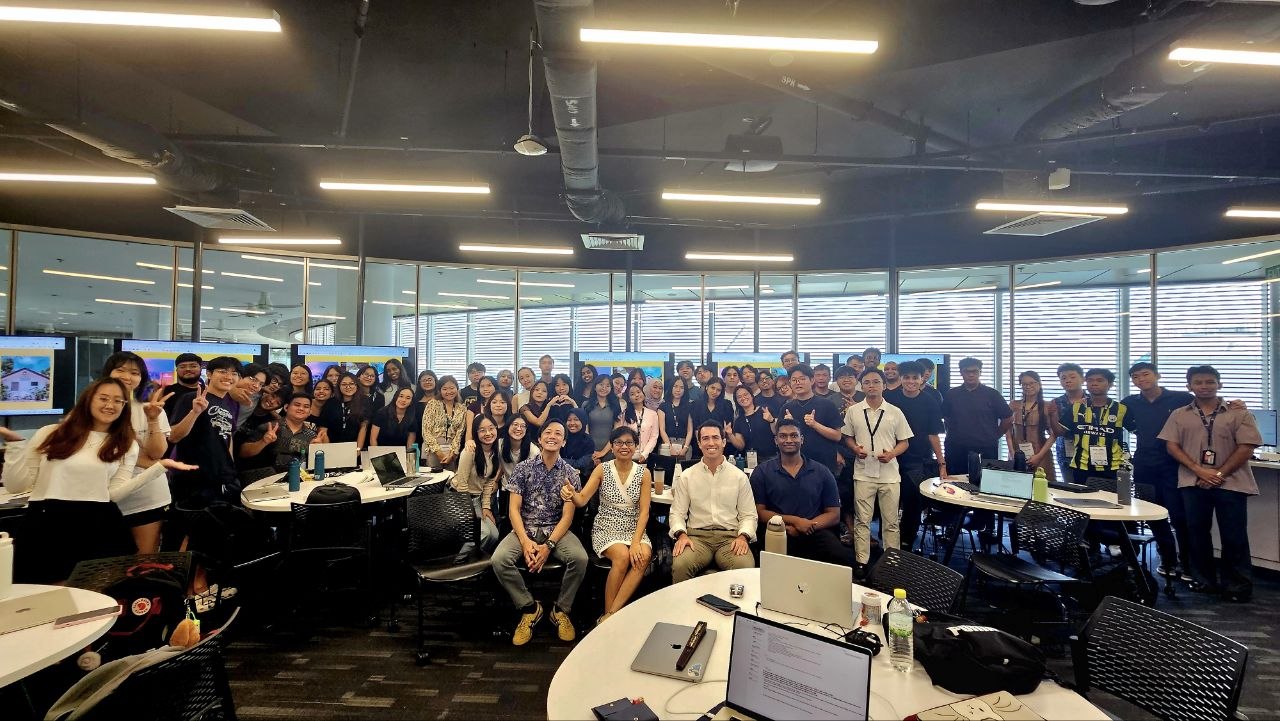
On Day 6 of the ASEAN Summer Track 1 programme, 'Venturing into Entrepreneurship', held at TR 36, ARC, NTU, students sat down for a fireside chat with serial entrepreneur Clarence Chua, Founder of Sundowner, following an opening session by Associate Professor Lerwen Liu.
Prof Liu walked students back through the entrepreneurial characteristics framework the cohort had built earlier in the programme — the eight traits, opportunity recognition chief among them, that the class had been using to size up founders throughout the week. She also revisited a few business-model use cases, including the now-familiar NVIDIA story of infrastructure investment scaling into a monopoly, to show how the same traits show up again and again across very different industries.
Clarence took the room through his own winding journey: from a first job in financial journalism, into landscaping, and eventually into beekeeping, farm tours, a shophouse "house" concept, and a travel platform, showing how almost any hobby can be shaped into a real business once you find the problem it quietly solves. His guiding line, repeated throughout the session, was that "It is easier to ask for forgiveness than for permission," which he used to explain how he launched ventures without waiting for approval that might never come. He balanced this with a warning against ego, urging students to chase sustainable margins over prestigious addresses.
Students left visibly energised, and several said his candid stories about near-failures made entrepreneurship feel less like a leap and more like a series of manageable, learnable steps.
From Journalism to Bees: A Career Built on Pivots
Chua's story began in 2006, straight out of school, in a journalism role that he left behind for a hands-on landscaping business, a decision made harder by graduating into the 2008 financial crisis. Over a decade, that business grew into a fully-fledged operation, until COVID-19 forced another pivot: after rescuing his workers from a dormitory lockdown, he moved operations to a shophouse rooftop and reinvented the business as a nature, education, and conservation venture teaching organic gardening and, almost by accident, rescuing his first colony of bees. That hobby became a beekeeping business, a farm-tour attraction, and eventually a sustainability award-winner.
Key Message: Solve a Problem, Not a Product
Chua's core advice was to stop thinking in terms of products and start thinking in terms of problems. Removing bee swarms became a saleable product; a "mobile-free" phone-in-a-box challenge became part of his pizza-making experience business, deliberately positioned against AI-driven convenience. He also stressed working on the business rather than in it — by scaling through marketing and delegation rather than personally running every class or event.
He was equally direct about bias for action over hesitation: "Just try it, just do it. You really have to push the limits of what you think is possible." For him, momentum comes before certainty; you learn what's possible by testing limits, not by waiting to feel ready.
Mr Joe Nguyen: Building Defensible Startups in the AI Era
The day's programme also featured Mr Joe Nguyen, who took a sharper, more technical look at what entrepreneurship looks like when AI is part of the toolkit. His central point was that AI has lowered the barrier to building "vibecoding" making it far easier to reach a Minimum Viable Product, but that ease is exactly why founders need to think harder about defensibility.
He argued that speed alone is no longer a moat, since anyone can copy a fast-built product; distribution, data, and trust are what actually hold. He also urged students to stay grounded in real human needs rather than chase quick dopamine hits, to be alert to the biases baked into the platforms they use and build on, to track fast-shifting government regulation, and to treat provenance and verifiable identity with blockchain as the underlying "plumbing" as increasingly valuable, not less, as AI scales.
Takeaway for Students
Clarence closed by turning the mirror back on the students, encouraging them to "Just reflect, recall what we've done, and reflect on yourselves, and how would you like to improve some of those characteristics." The room came away with a simple, repeatable idea: passion projects like bees, gardens, even Lego can become businesses if you find someone else's problem to solve, keep fixed costs low, and are willing to act before permission arrives.
Mr Joe Nguyen's message added a timely counterpoint for the AI era: building fast is no longer enough, and founders need a real moat beyond speed. He reminded students that distribution, data, and human trust matter more than ever, even as tools make it easier to ship products quickly. His closing point was that verified identity and provenance become more valuable, not less, as AI scales, left students thinking about long-term credibility rather than short-term speed.