Kawasaki’s Once in a Century Opportunity: Investing in the Next Gen GX Industry
· Kawasaki, Japan, GX, green transformation, ESG, hydrogen, circular economy, NTU, HCSREL, collaboration
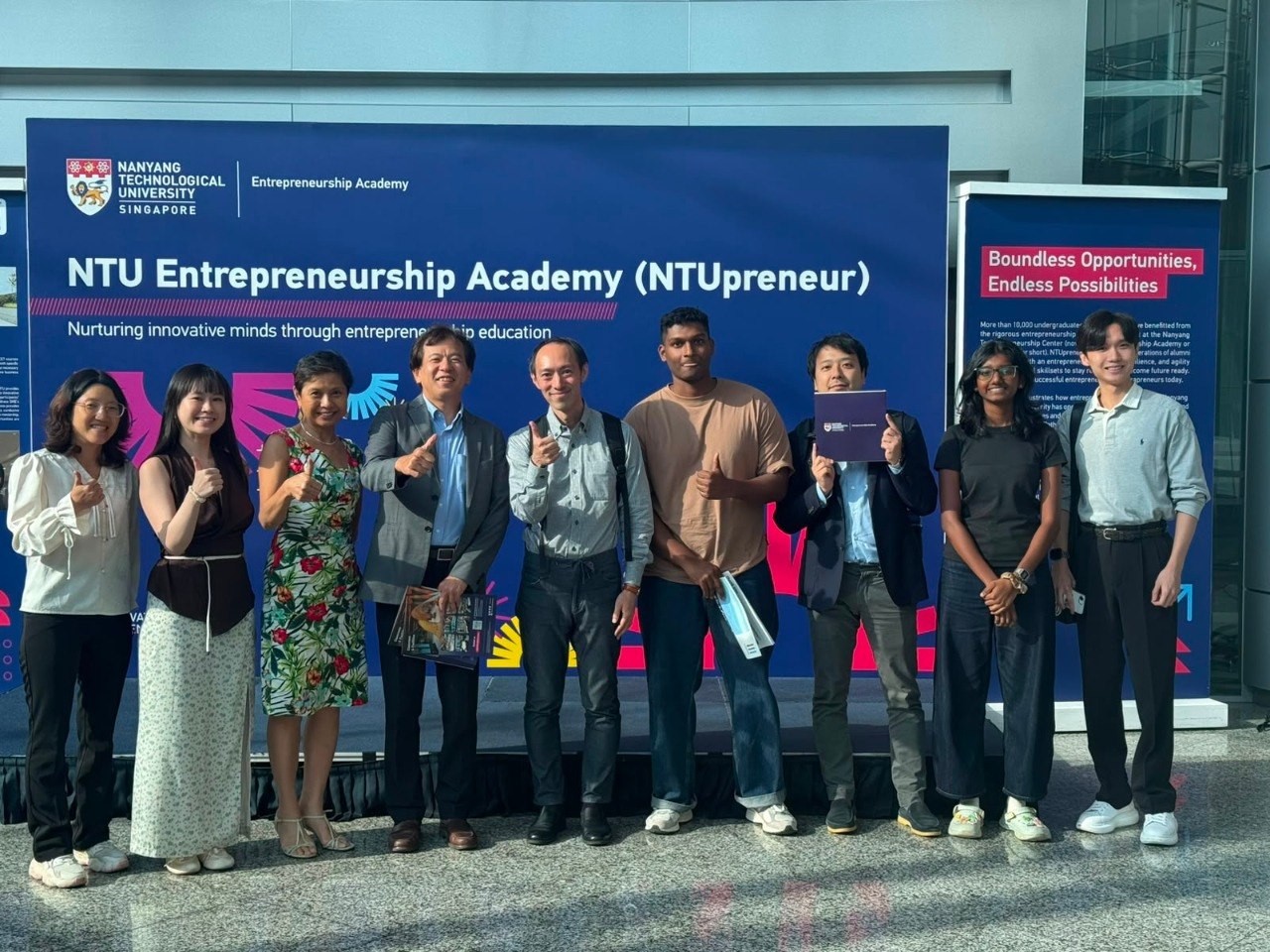
On 31 July, a delegation from Kawasaki City, Japan met with Associate Professor Lerwen Liu at NTU's Entrepreneurship Academy. Kawasaki's purpose in visiting was to scout partners like research institutions, startups, and technology providers for its coastal GX redevelopment project, and to learn from Singapore's innovation-ecosystem model.
Kawasaki's team opened by outlining the city's strategic position near Tokyo and Haneda Airport, its base of over 550 R&D institutions, and its role as home to more than 70,000 businesses in the coastal industrial belt. The centrepiece of their presentation was the Kawasaki GX (Green Transformation) project: a plan to convert roughly 400 hectares of former JFE Steel land in the Minami-Ohgishima and Ogishima zones into a next-generation hub for hydrogen energy, AI-ready data centres, and circular-carbon manufacturing, developed under Japan's national GX Strategic Zone framework. A large R&D facility is slated to open in spring 2028, with a scale-up hub to follow.
The Kawasaki side also described an already-operating "super sorting centre" handling municipal, industrial, and commercial waste, including chemical recycling of PET plastic into polymer-grade material by a JFE-linked subsidiary, with the city aiming toward near-zero waste.
HCSREL’s Green Economy Framing
In response, Assoc. Prof. Lerwen Liu introduced Human Centred Sustainability Research and Education Lab’s (HCSREL) mission of advancing "green economy" transitions into a broader framing than circular economy alone, encompassing carbon reduction, material efficiency, inclusiveness, and natural capital financing. She demonstrated HCSREL's AI-powered ESG platform, which ingests lengthy sustainability reports (100–200+ pages) and extracts data from both text and figures to generate normalised, comparable dashboards.
A live example compared Changi Airport's ESG performance against Taoyuan and Hong Kong airports, showing that an apparent leader on one metric (e.g., energy intensity) could lag on another (e.g., waste), and that fair comparison hinges on carefully checking reporting boundaries and standards (GRI vs. ISO 14064) before drawing conclusions.
Scouting Collaborators for 2028
Kawasaki's team was not presenting a finished deal but actively scouting collaborators. Their 2028 R&D zone is designed to host outside startups and research institutions, and they explicitly invited HCSREL to "explore potential collaboration." They also drew comparisons to NTU's Block 71/79 and Fusionopolis ecosystems, signalling interest in replicating that live-work-research model around their redeveloped steel land.
The JFE-linked recycling subsidiary was described as actively looking to expand its data and analytics capabilities — a concrete opening for HCSREL's ESG platform, which Prof. Liu's team offered to let Kawasaki trial to benchmark its carbon-neutral progress, support its net-zero targets, and communicate performance to investors more effectively than static PDF reports allow.
Both sides agreed to continue exploring collaboration, with Kawasaki's 2028 R&D facility timeline offering a natural checkpoint for deeper partnership.