Life Cycle Thinking in Entrepreneurship for Sustainable Development by Prof. Shabbir Gheewala
· Life Cycle Thinking, Life Cycle Assessment, Sustainability, Entrepreneurship, Eco-design, Environmental Impact, Greenwashing, Circular Economy, Biofuels, Eco-labeling, Planetary Boundaries, Resource Efficiency, Eco-efficiency
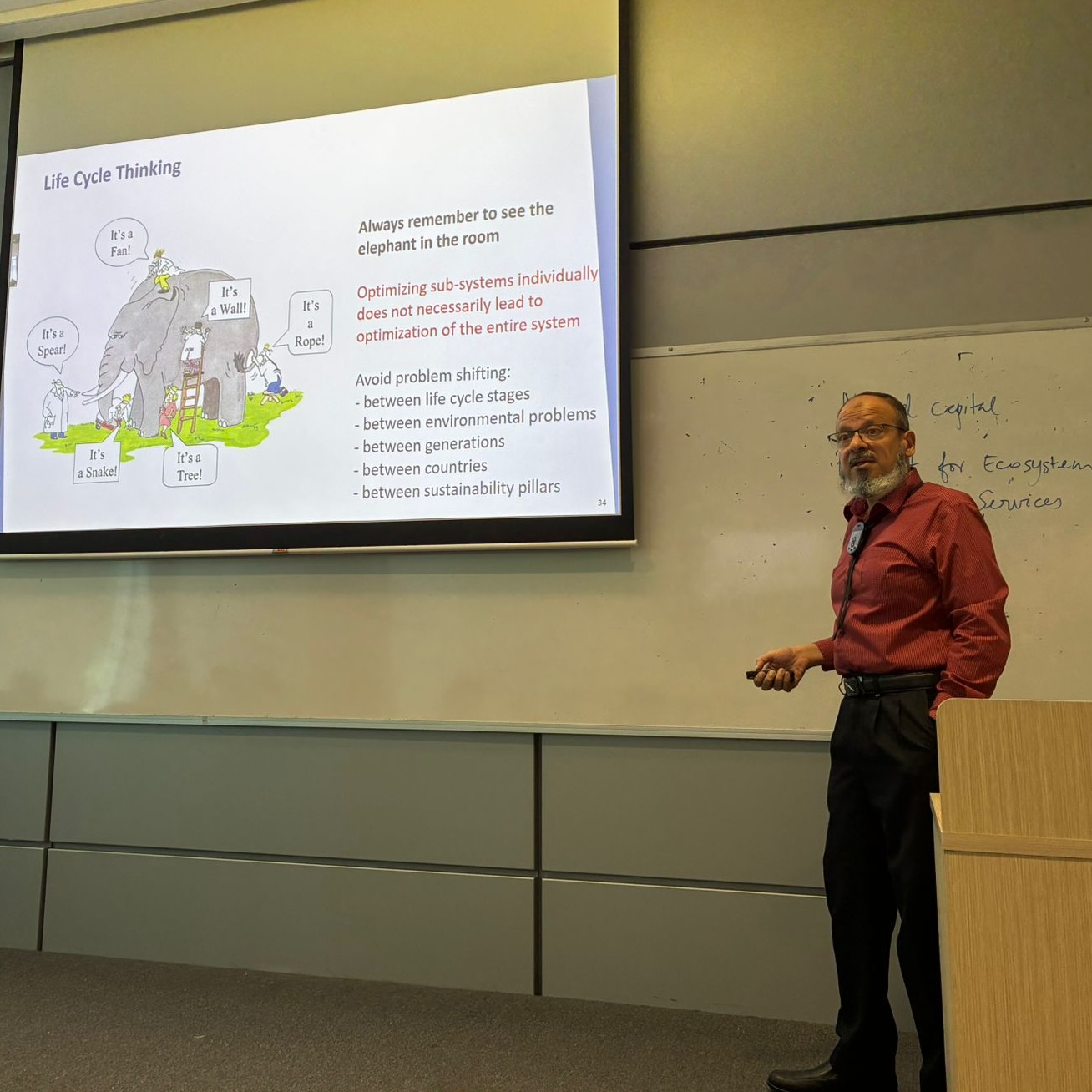
Professor Shabbir Gheewala delivered an insightful introduction to Life Cycle Thinking (LCT) and Life Cycle Assessment (LCA), emphasizing their critical role in achieving sustainable development. The core message revolved around the necessity of a holistic perspective, viewing the entire 'elephant' – a product's complete life cycle – rather than isolated parts or impacts.## The Urgency of Holistic ThinkingThe session began by broadening our understanding of the 'environment' to encompass everything around us, including human society. Professor Gheewala outlined the three key areas of protection: human health, ecosystem quality, and resources. He highlighted the concept of [planetary boundaries, noting that humanity is currently exceeding six out of nine defined limits. This underscores the urgency for a comprehensive approach, as focusing on single issues (like climate change) in isolation can inadvertently exacerbate other problems, a phenomenon illustrated with the example of biofuels impacting land use, water, and biodiversity.Understanding the Product Life CycleProfessor Gheewala meticulously detailed the product life cycle, from 'cradle' (raw material extraction, like crude oil for plastic bottles) through manufacturing, distribution, use, and finally, 'grave' (disposal). He stressed that every stage involves environmental impacts on human health, ecosystems, and resources. LCA emerges as a powerful tool to quantify and assess these multi-stage, multi-impact environmental burdens.LCA: A Tool for Eco-Design and Decision-MakingInterestingly, LCA originated from production engineers seeking tools for eco-design. The lecture emphasized that the maximum impact on a product's environmental footprint can be made during the conceptual design phase. Key strategies include selecting environmentally friendly materials (renewable, less toxic, less energy-intensive), dematerialization (using fewer materials, like thinner bottles or smaller phones), cleaner production, optimizing distribution, and extending product life.The session also explored how LCA influences various stakeholders:- Policymakers: Governments use LCA principles to develop integrated product policies, green purchasing plans, and transparent eco-labeling schemes (Type 1, 2, and 3) that guide consumers and incentivize industries.Industry: Companies leverage LCA for communication (environmental reporting, sustainability reports), eco-design, process optimization, strategic planning, benchmarking against competitors, lifecycle cost accounting, and designer training. An example from a Thai company showcased how LCA results drive carbon dioxide reduction and overall sustainability reporting.Consumers: Empowered by eco-labels and industry transparency, consumers can make more informed, environmentally preferable choices. Beyond Environmental Footprints: Towards Sustainability
While acknowledging the role of single-issue footprints (like carbon and water footprints) in driving initial industry interest, Professor Gheewala reiterated the LCA community's preference for comprehensive assessments to avoid trade-offs. The discussion broadened to include the three pillars of sustainability: environment, economy, and society. He introduced Life Cycle Sustainability Assessment (LCSA), which integrates Environmental LCA, Life Cycle Costing, and Social Life Cycle Assessment to ensure improvements in one area don't come at the expense of another.The session concluded with an engaging Q&A, addressing topical issues like greenwashing (highlighting third-party verification as a safeguard), the ethical and environmental implications of using food waste for biofuels](#) (terming it 'downcycling' if not properly managed, urging a focus on waste prevention), and the complexities of determining product lifespan thresholds for items like plastics versus energy products like cars.Professor Gheewala's presentation served as an excellent foundation, setting the stage for deeper dives into circular economy principles and advanced lifecycle analysis in subsequent sessions.