Partners, Not Passengers: Students Take the Stage on AI at QS Asia Pacific
· AI in education, student partnership, higher education, AI literacy, human-centred AI
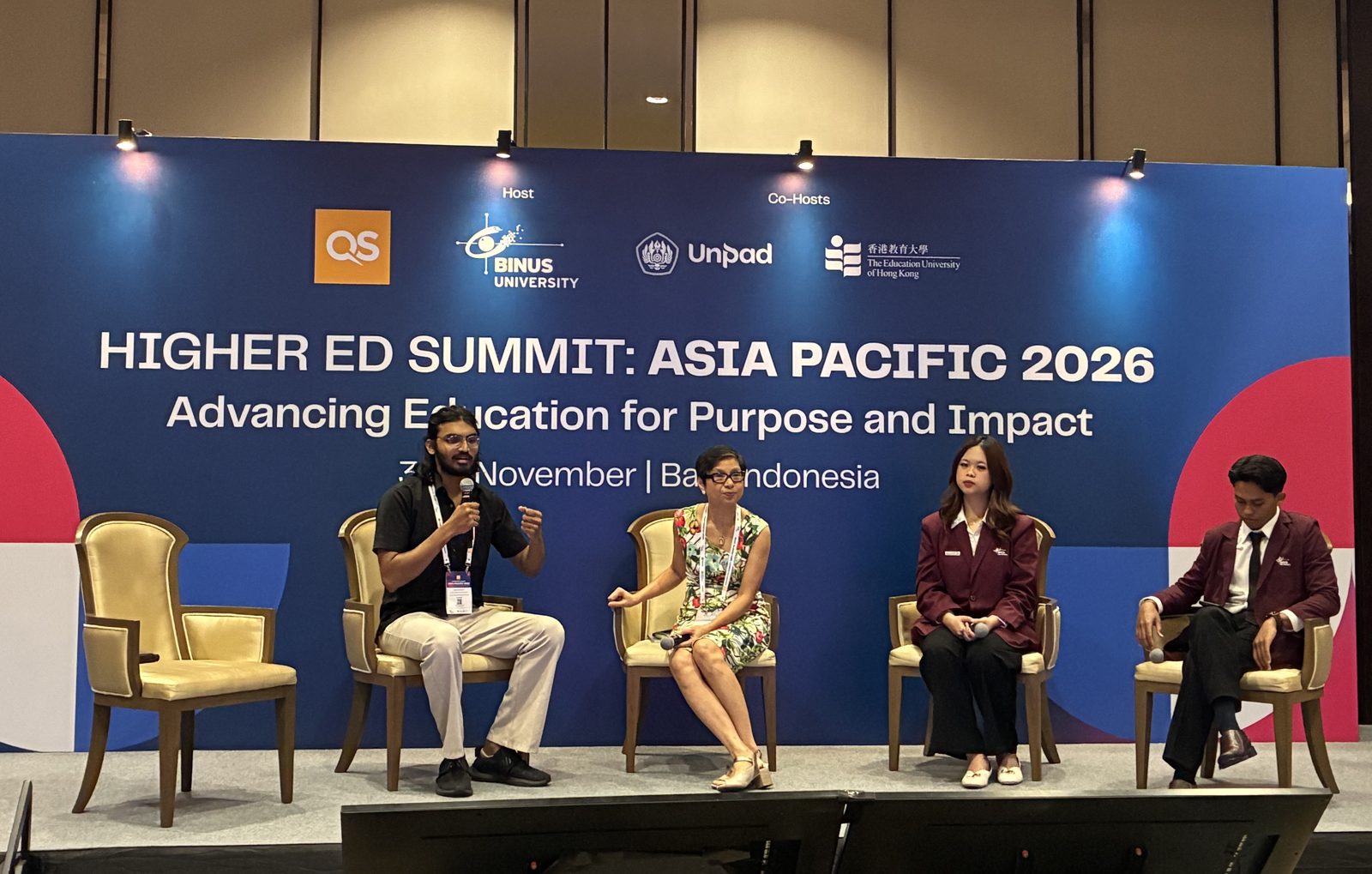
At QS Higher Ed Summit: Asia Pacific 2026, an all-student panel moderated by HCSREL's Prof Lerwen LIU had one shared message: let students co-create their learning, keep human thinking at the centre, and build the ecosystem that makes both possible.
Bali, 3 November 2026. "AI, Unfiltered: Students Have Their Say" is believed to be the first session in the summit's history in which the entire panel was made up of students. The summit was hosted by BINUS University, with co-hosts Universitas Padjadjaran and The Education University of Hong Kong, under the theme "Advancing Education for Purpose and Impact".
Moderator Prof Lerwen LIU (NTU), who leads HCSREL, explained why it mattered. In Asia, respect for teachers has often been taken to mean "we don't talk back", and "I think it is time to change, especially in this technological disruptive era." The students soon made it a two-way conversation. They ran their own show-of-hands polls and took questions from the floor, in one of the liveliest speaker–audience exchanges of the summit. That is the kind of exchange HCSREL, "Building the Human-Centric Ecosystem for a Green Transition", works for: young people as members of the ecosystem, not just its audience.
Partners, not passengers
The first thread was partnership. "At NTU … we are raising student as a stakeholder," Prof LIU said, "to co-learn together and to do research and co-teach."
Vasanth SREERAM (NTU, HCSREL) is a working example. He founded LintLabs (lintlabs.org), which builds AI tools such as Scribe, a meeting-notes tool, and runs AI training for companies and universities. He is a student who gives back to the system that teaches him. His advice: "teach people how to use AI like electricity, but not like how you would use a microwave," so that students become "producers, not just consumers of technology that somebody else builds." In practice, that means giving every student their own API key, with budgets "for each individual students," just as universities budget for electricity or water. It also needs "infrastructure" and "people … in training". In short: "give the students a key and empower them."
The room tested this straight away. A university delegate asked whether AI should be kept out of homework. SREERAM said no: "we don't ban calculators, we're just making the exams and tests much harder." Farrel Arganta NADHYTA (BINUS University) asked his peers to do their part too: "stop treating teachers as an obstacle … and start treating the teachers as partners."
Keep the human in the loop
What do human partners bring? All four speakers said judgement. NADHYTA said the trouble starts when "help me" becomes "do it for me", and a good teacher "would have you question the answer that these AIs give." SREERAM warned that AI can give "a very false sense of understanding". His fix is to have AI test him on the fundamentals. Ivania Keisha CANDRA (BINUS University) pointed to the human cost. Chatbots give a "perfectly structured response, but they are not very human," and a debate against an opponent who answered with AI "doesn't feel debating anymore."
The audience pushed further. A mechanics lecturer asked how students can "verify the output of AI while you are learning using AI". SREERAM's answer was fundamentals, because engineers "are accountable for whatever they sign, whatever they approve." A teacher from the Philippines asked "where do you draw the line between AI assistance and … cheating?" All three students answered. SREERAM said assessment should use real problems: "the more unsolved that particular problem is, the more … you can actually see how much they have learned." CANDRA described AI as "a partner for me to learn". NADHYTA said teachers have not yet been trained to teach AI use.
Educators in the room agreed. An academic from Taylor's University said "the human thing is actually more important than all of the other stuff." Prof LIU added: "I feel very strongly about our humaneness." HCSREL follows the same rule: "Gut feeling isn't enough"; claims have to be proved.
An ecosystem job
None of this happens by itself. NADHYTA first asked how many in the room were educators; most of them were. He then urged institutions and policymakers to invest in educators, "training their minds, and most importantly, protect their pay," because "if we want a society that lives alongside AI without losing its ability to think, we have to start by valuing the people who teach us how." CANDRA asked leaders to set the example, "we follow what we see." If universities want students as partners, she said, "they should start using the students itself."
A Gen Z delegate from Elsevier said it is "very rare to hear directly from Gen Z and from students". Usually, she said, people talk about Gen Z "when they're not even in the room". She then asked about social life after COVID and AI, and SREERAM answered with findings from interviews he had done with his peers.
Building it with students
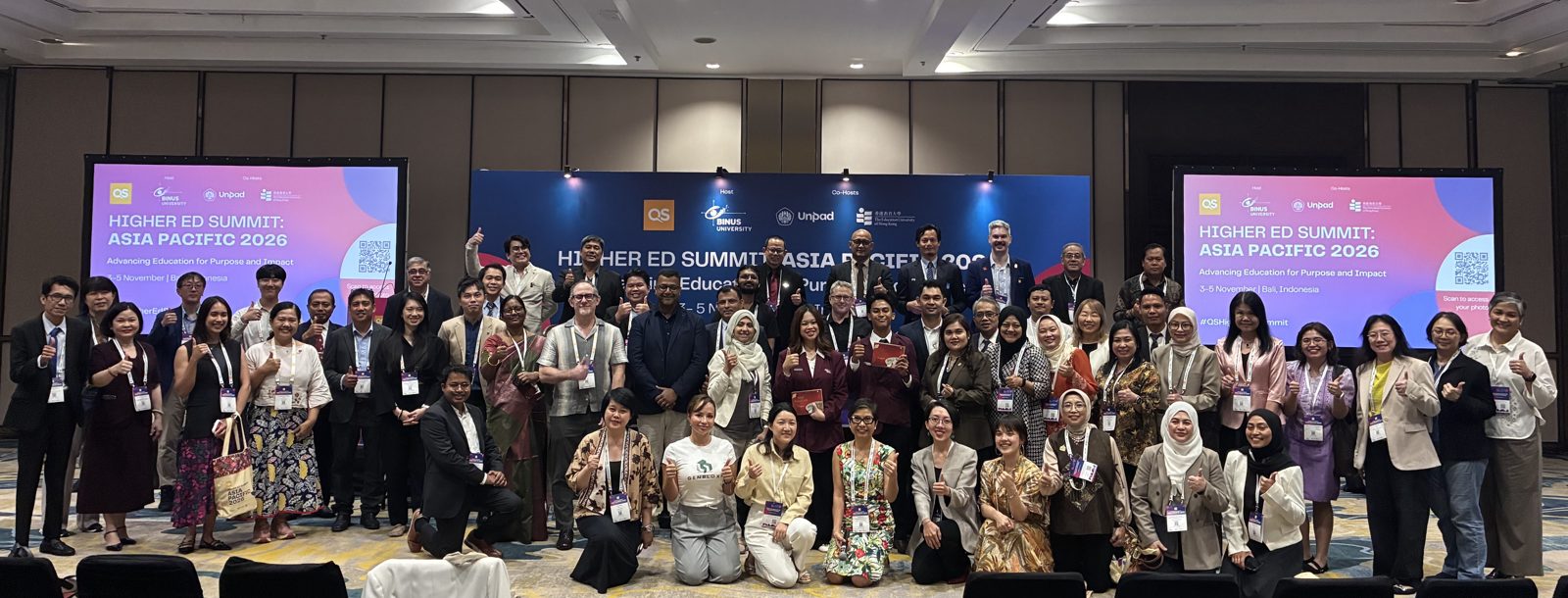
For HCSREL, an "ecosystem hub based at Nanyang Technological University (NTU), Singapore", the session showed its model at work: students, educators and institutions in one conversation across countries. It follows the lab's "Youth, AI & Sustainable Enterprise" event (18 May 2026) and its work on "building the leaders, knowledge, and data-driven tools" for the green transition. SREERAM shows what that looks like when a student is a partner in his own education. True to "we don't let good ideas die in a report", HCSREL will carry the message forward: the human-centric ecosystem has to be built with students, not just for them.