The Program Ends, But the Story Doesn't
· ASEAN, entrepreneurship, NTU, pitch day, student ventures, HCSREL, SDG 4, SDG 8
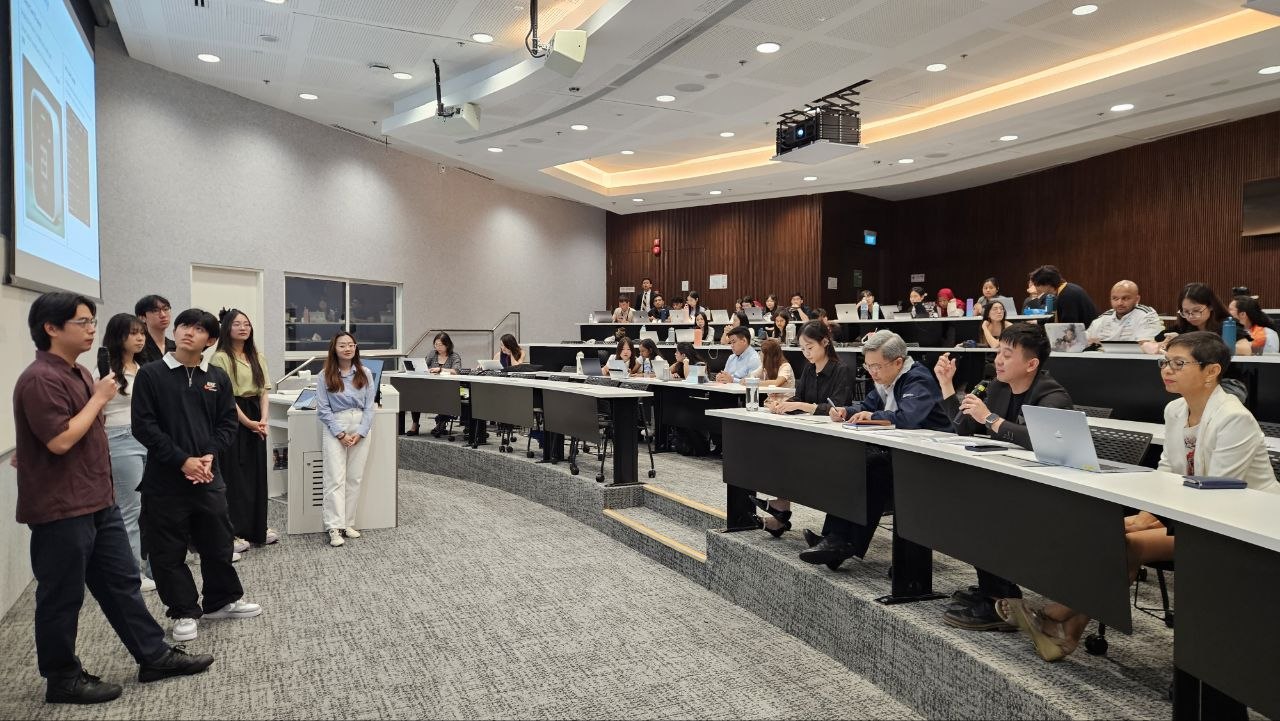
On July 10, 2026, Track 1 of the ASEAN Summer Program concluded its two-week run on "Venturing into Entrepreneurship," with the final day entirely dedicated to the students. Eleven teams stood up to pitch ventures built from scratch over the previous nine days, each one required to identify a real problem, explain why it mattered, and defend a workable solution in front of judges, including Jerrick Tee and Dennis Low Peng Thiam.
What students walked in with was a largely raw curiosity and untested ideas and they walked out having converted into structured pitches: problem statements backed by data, prototypes or simulations to prove feasibility, phased rollout plans from validation to pilot to scale, and business models with real numbers attached. Judges pressed teams on technical gaps, measurable impact, and details many first-time founders overlook, forcing sharper thinking on the spot. The day closed with Associate Professor Lerwen LIU presenting certificates to Track 1 participants, marking the intake's transformation from students with an idea into presenters who could defend one.
Nine Days, Eleven Ventures
Nine days is a short runway to build a venture from nothing. But that was the intake of Track 1: a group of students who arrived with observations about problems around them, and a program designed to turn those observations into something structured enough to pitch.
What the students delivered on the final day was not a single kind of outcome, but a consistent shape across eleven very different ideas. Each team had to name a real, specific problem rather than a vague one, back it with evidence instead of assumption, and propose a solution that could survive scrutiny. Teams built early prototypes, ran simulations, and mapped out multi-phase rollout plans from a small pilot to a fully scaled venture, complete with costs, revenue models, and partners they had identified along the way.
That shift, from noticing a problem to defending a plan, is the real outcome of nine days of class. It is easy to have an idea. It is much harder to hold that idea up against pointed questions and not lose the plot. On the final day, students had to do exactly that.
Pressure as Part of the Outcome
The judging panel, involving Mr. Jerrick Tee and Mr Daniel, did not let any pitch go unchallenged. Questions probed whether the technology actually worked the way teams claimed, whether the impact numbers were realistic or just optimistic estimates, and whether teams had thought past their first prototype into what scaling would actually require. That kind of pressure was itself part of the outcome: students left not just with a pitch deck, but with a clearer sense of where their thinking was still soft.
What tied the day together was less the individual pitches and more the pattern behind all of them. Nine days earlier, these were students. By the final presentation, they were founders defending a plan, in front of people qualified to poke holes in it.
Recognition, Not Just Critique
The program closed the way it should: with recognition, not just critique. Assoc. Prof. Lerwen LIU presented certificates to every student in Track 1, formally marking the end of the ten-day program. But a closing ceremony is rarely a true ending for ideas worth pursuing. For the students who leave with a plan they still believe in, day ten is less a finish line and more the first page of whatever they choose to build next.
That much became clear just a few days after the program ended. Jerrick Tee reached out to say that five of the eleven teams, Groups 1, 4, 5, 8, and 11, had been identified as having the potential to continue into NTU's Growing Entrepreneurial Talents (GET) innovation grant, with plans to reach out to each of them directly. Dennis, on his part, flagged individual students who stood out during the presentations, students who showed strong founder potential, leadership, confidence, and entrepreneurial aptitude, and pointed them toward NTU's MSc Technopreneurship & Innovation (TIP) programme for possible follow-up. It was proof that the judging on day ten was never just a formality; it was the start of a real filter, one that could carry a handful of these ideas, and the people behind them, past the classroom and into something fundable.