Trash Talk: What a Field Trip to BugBoom and City Square Mall Taught Students of the ASEAN Summer Track 1 Program About Waste
· ASEAN, circular economy, waste management, BugBoom, upcycling, SDG 12, entrepreneurship, field trip
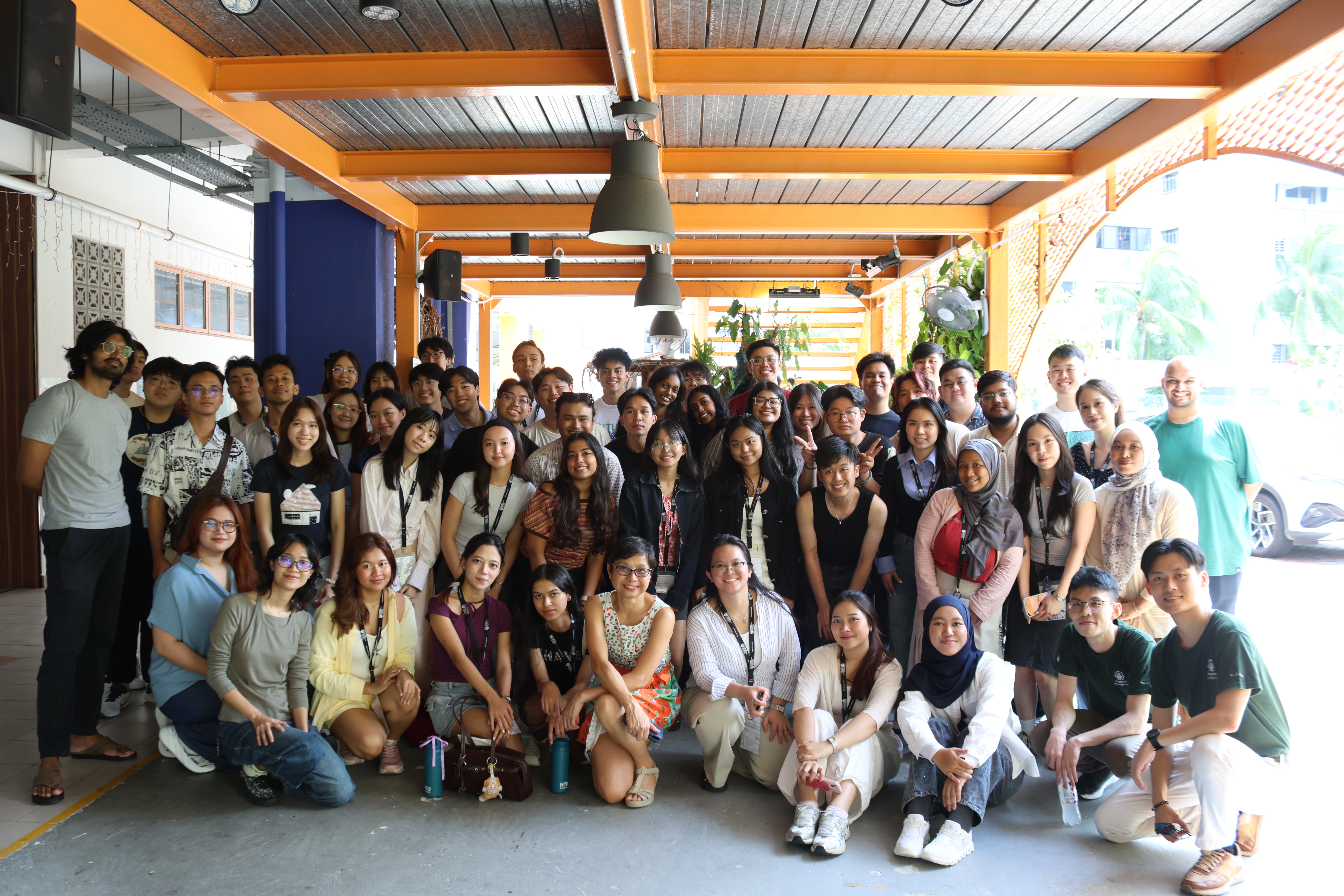
Day 3 of ASEAN Summer Track 1 program on Venturing into Entrepreneurship was a visit to two very different sites in Singapore: startup BugBoom at VidaCity in the morning, and City Square Mall in the afternoon, guided by architect Lai Ngo of design firm Kiew. Both visits carried the same core message — waste, handled right, does not have to disappear into a bin; it can become fertiliser, animal feed, fabric, or even a building.
The insight students were meant to walk away with was less about the science and more about the thinking behind it: BugBoom founders did not just explain how to run a business, they explained why they started it, what impact they were chasing, how every waste stream gets reused, and how to identify and reach the right partners and customers. Putting Assoc. Prof. Lerwen's entrepreneurship framework from the day before class was directly put into practice.
At City Square Mall, that same "waste is a resource" mindset showed up in design form, with chopsticks, PET bottles, and e-waste transformed into architecture most visitors would not recognise as recycled at all. Students left with a working knowledge of food waste mineralisation, the black soldier fly life cycle, and how upcycled materials get built into real spaces.
Stop 1: Bugs Eating Your Leftovers
At VidaCity, BugBoom co-founders introduced their business in one line: food waste mineralisation — turning the millions of tonnes of food scraps Singapore throws out every year into compost, fertiliser, and animal feed.
The star of the show was the black soldier fly. Its larvae will eat almost anything from meat to veggies and even chilli seeds. Turning it into frass, a nutrient-rich by-product nicknamed black gold for how prized it is as fertiliser. We watched the whole life cycle unfold in front of us: eggs laid in dark, tight spaces on ice-cream sticks, larvae that gorge on food waste for about a month, pupae that darken just before hatching, and adults that mate, lay eggs, and die within weeks, resetting the cycle. Most larvae never make it that far into the lifecycle; they are harvested first and sold as protein-rich animal and fish feed.
Not everyone reacted the same way to seeing thousands of live larvae up close. Some students recoiled, others laughed it off and leaned in for a closer look. The kind of reaction a lecture slide could never get out of a room.
The second act was duckweed. Leftover food waste is broken down and filtered into a nutrient-rich liquid called effluent, which is poured over duckweed. The plant soaks up the nutrients and grows into a thick mat known as duckweed biscuits, that gets fed right back to the larvae. Nothing goes to waste, literally. The founders advice for aspiring entrepreneurs was simple: find a problem no one is solving properly, then look for ways to combine existing ideas instead of reinventing everything. BugBoom edge is that almost no one else combines composting, insect farming, and duckweed cultivation into one system.
Stop 2: A Mall Designed From Garbage (You Would Never Know It)
Next stop was City Square Mall, Singapore's first Eco Mall, recently refurbished by architecture firm Kiew. Principal architect Lai Ngo led us through lift lobbies and feature walls made almost entirely from things most people throw away, recycled disposable chopsticks pressed into wall panels, PET bottles spun into acoustic panels and the orange fabric ribbons wrapping the atrium, compressed bubble wrap turned into a thin fabric stuck onto plywood, and wood fibre off-cuts from carpentry shops compacted into decorative boards.
The twist is that most of it does not look recycled at all. That is the point. As Lai Ngo explained, people assume upcycled material has to look cheap or ugly, so Kiew designed everything to prove that wrong — you would never guess the wall panel next to the lift is made of chopsticks unless someone told you.
It is not without trade-offs. The upcycled finishes cost roughly 15 percent more than standard materials, mostly due to R&D and labour, and while they are water-resistant, they are not fully waterproof, making them unsuitable for constantly wet areas. Supply is tricky too, vendors often have to buy waste like used chopsticks and bottles, since donations alone do not have the scale, and the market is still young, with most upcycling vendors used to making small products like posters rather than building-scale architecture.
Two very different stops, one shared idea: waste is just a resource that has not found its next job yet. BugBoom proved it at the scale of an insect gut. City Square Mall proved it at the scale of an entire shopping mall. Somewhere between the two, the line between trash and design material starts to blur, which might be exactly the point.