Turning Pallets and Plastic into Progress: Changi Airport Charts a Circular Path
· Changi Airport, circular economy, waste management, plastic recycling, pallets, Miniwiz, Trashpresso, LCA, HCSREL, NTU
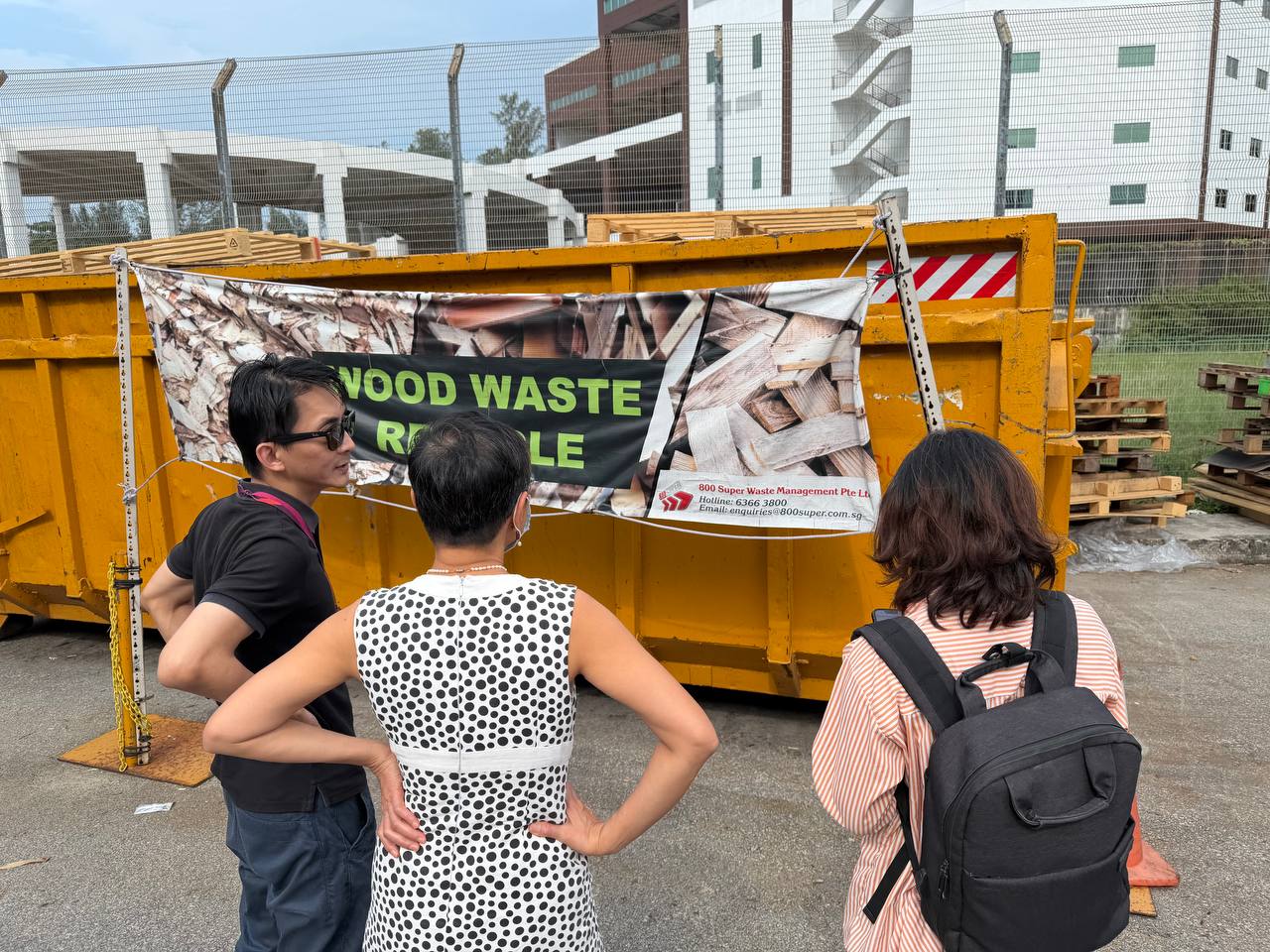
Singapore, 20 July — Changi Airport Group (CAG) met with Human Centred Sustainability Research and Education Lab's team (HCSREL) at Changi Airport to discuss new approaches to tackling two persistent waste streams: wood waste from cargo and retail pallets, and plastic waste from wrapping and packaging materials. The discussion centred on how research-backed circular economy solutions and technologies, such as Miniwiz's Trashpresso, could help CAG cut disposal volumes and diversify its waste diversion strategy beyond incineration.
The Waste Challenge
Despite CAG's progress on emissions and energy efficiency, its FY2024/25 Annual Report shows that total waste generated climbed to about 18,000 tonnes, with only 23% diverted from incineration, which is still short of the airport's ambition to build a genuinely circular resource loop. Much of this volume is driven by pallets used to move retail and cargo goods airside and landside, and by plastic film and wrapping used to secure shipments and merchandise, both of which are typically single-use and discarded after one journey through the terminal.
Learning from Taoyuan
The meeting drew on practices at Taiwan Taoyuan International Airport (TTIA), operated by the Taiwan International Airport Corporation (TIAC). TIAC's approach, including a formal Waste Management and Reduction Plan targeting a 70% cut in disposable product use by 2030, the use of eco-friendly and recyclable pallets, reusable transport containers, and upcycled installations built from incinerator bottom ash and recycled plastic bottles, was cited as a model of how an airport can embed circularity into everyday operations rather than treating sustainability as a side initiative.
HCSREL, led by Associate Professor Lerwen Liu, focuses on human-centred circular economy research, life-cycle assessment (LCA), and translating sustainability science into workable industry solutions — expertise the lab has built through its work with organisations including the Asian Development Bank. Its website, hcsrel.com, sets out the lab's capabilities in LCA training, circular business model design, and connecting startups and technology providers with industry partners through initiatives such as its Green Economy accelerator programme. For CAG, this position's HCSREL as a potential partner to audit the life-cycle impact of pallet and packaging materials, and to identify and pilot upcycling technologies suited to airport-scale waste streams.
A Possible Path Forward: Trashpresso
One technology discussed was Trashpresso, Miniwiz's mobile, solar-capable recycling unit that shreds, washes and heat-presses plastic waste into tiles, panels and furniture on-site, processing up to roughly 500kg of plastic a day. Deploying a Trashpresso-style unit at Changi could allow wrapping and packaging plastics collected from cargo and retail operations to be converted directly into building materials for terminal fit-outs or seasonal installations, mirroring TIAC's own use of recycled materials in its Christmas display. CAG and HCSREL agreed to explore next steps, including a feasibility study and possible engagement with Miniwiz.