What Students Need to Thrive: HCSREL's Vasanth SREERAM at the QS Higher Ed Summit: Asia Pacific 2026
· QS Higher Ed Summit, Asia Pacific 2026, higher education, sustainability, student learning, accountability, artificial intelligence, Bali, NTU
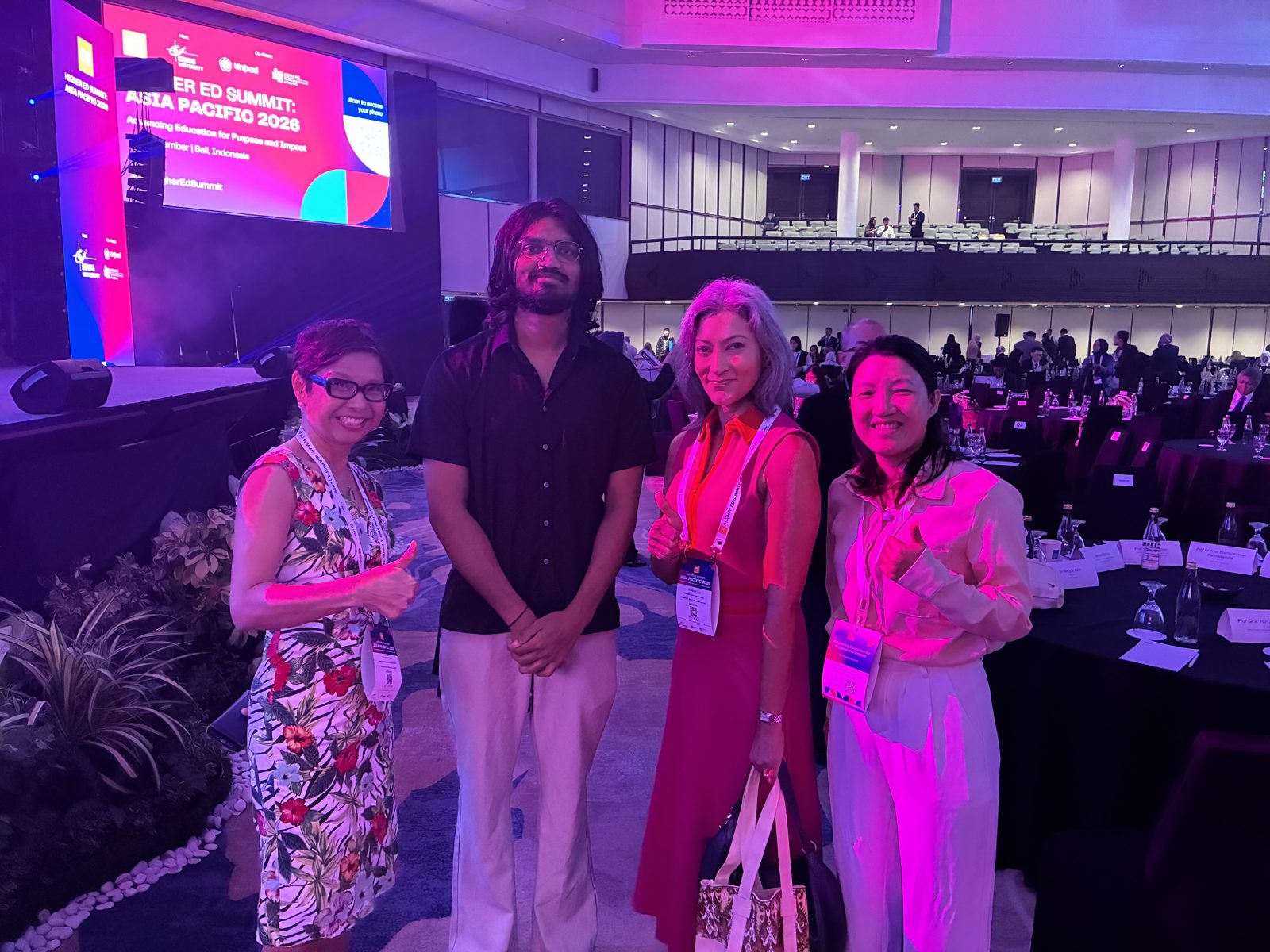
3 November 2026, Bali
The QS Higher Ed Summit: Asia Pacific 2026 opened on 3 November at the Bali International Convention Centre in Nusa Dua under the theme "Advancing Education for Purpose and Impact". In his keynote, Prof Badri Munir SUKOCO set out the question that ran through the morning: "Ranking gives us the credibility to lead. Impact is the proof that we have led well."
HCSREL was in the room, with Prof Lerwen LIU, Dr Simin XU and lab member Vasanth SREERAM attending. Vasanth also took the main stage for the opening fireside chat. His contribution went to the heart of the keynote's challenge: if impact is the proof, how should universities prepare students to deliver it?
The call for impact
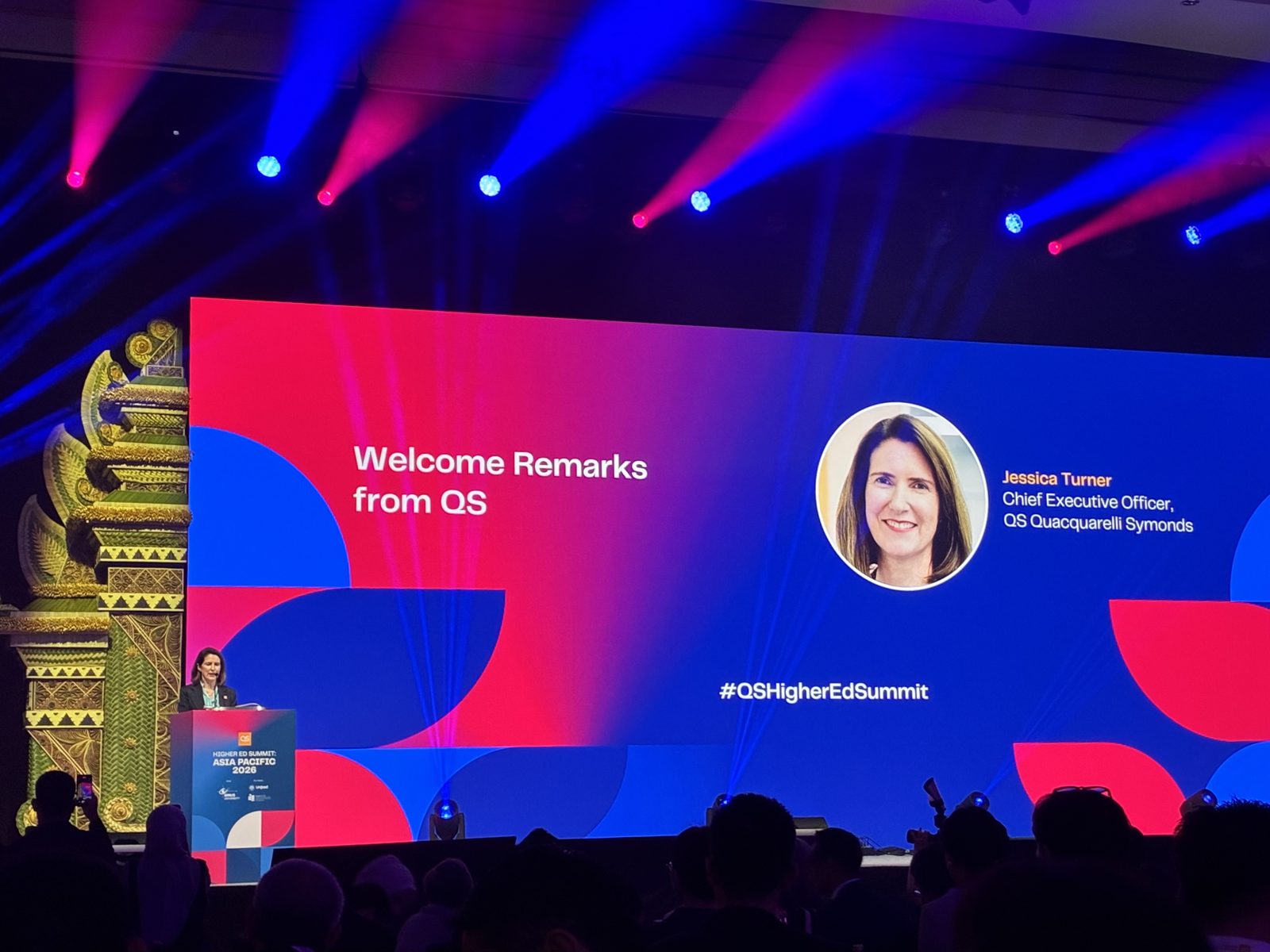
QS set the scene. Jessica TURNER, Chief Executive Officer of QS Quacquarelli Symonds, said universities "are being asked to demonstrate in a way that has never happened before that they are having impact", while "keeping that human purpose at the heart of it". She named sustainability among the themes the summit would discuss.
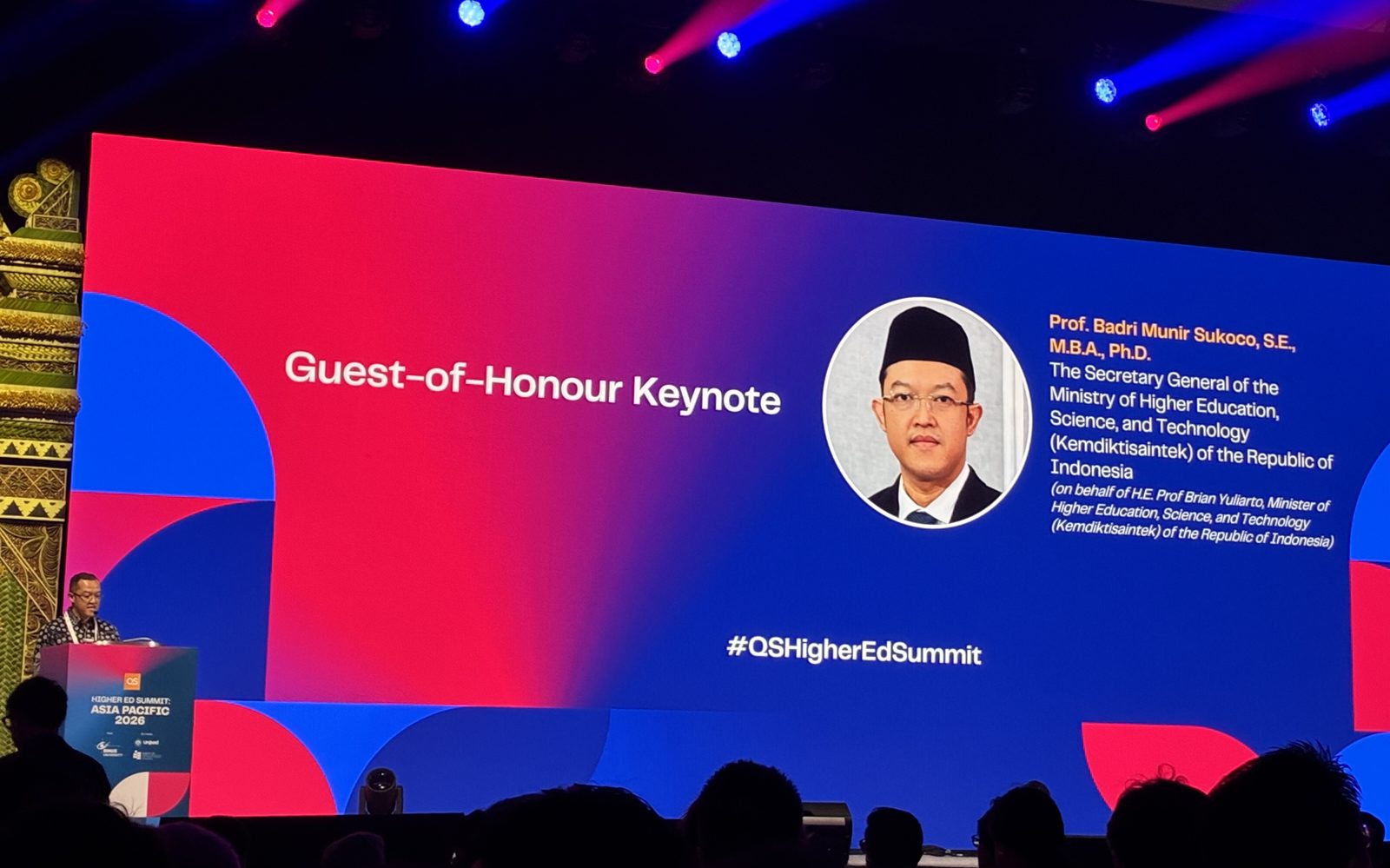
Prof Badri Munir SUKOCO, Secretary General of Indonesia's Ministry of Higher Education, Science and Technology, sharpened the point: "Higher education can no longer afford to be a passive observer." He drew on Bali's philosophy of Tri Hita Karana, "harmony with people, nature, and the divine", as a fitting backdrop for the summit's theme.
Prof Dr Arief Sjamsulaksan KARTASASMITA, Rector of Universitas Padjadjaran, made the same case from the university side: "Excellence is essential, but excellence must have a purpose, and that purpose must ultimately lead to impact." He pointed to climate change, public health and inequality as challenges facing the region.
The leaders described what universities must deliver. Vasanth spoke about how students learn to deliver it.
Vasanth's answer: what it takes for students to thrive
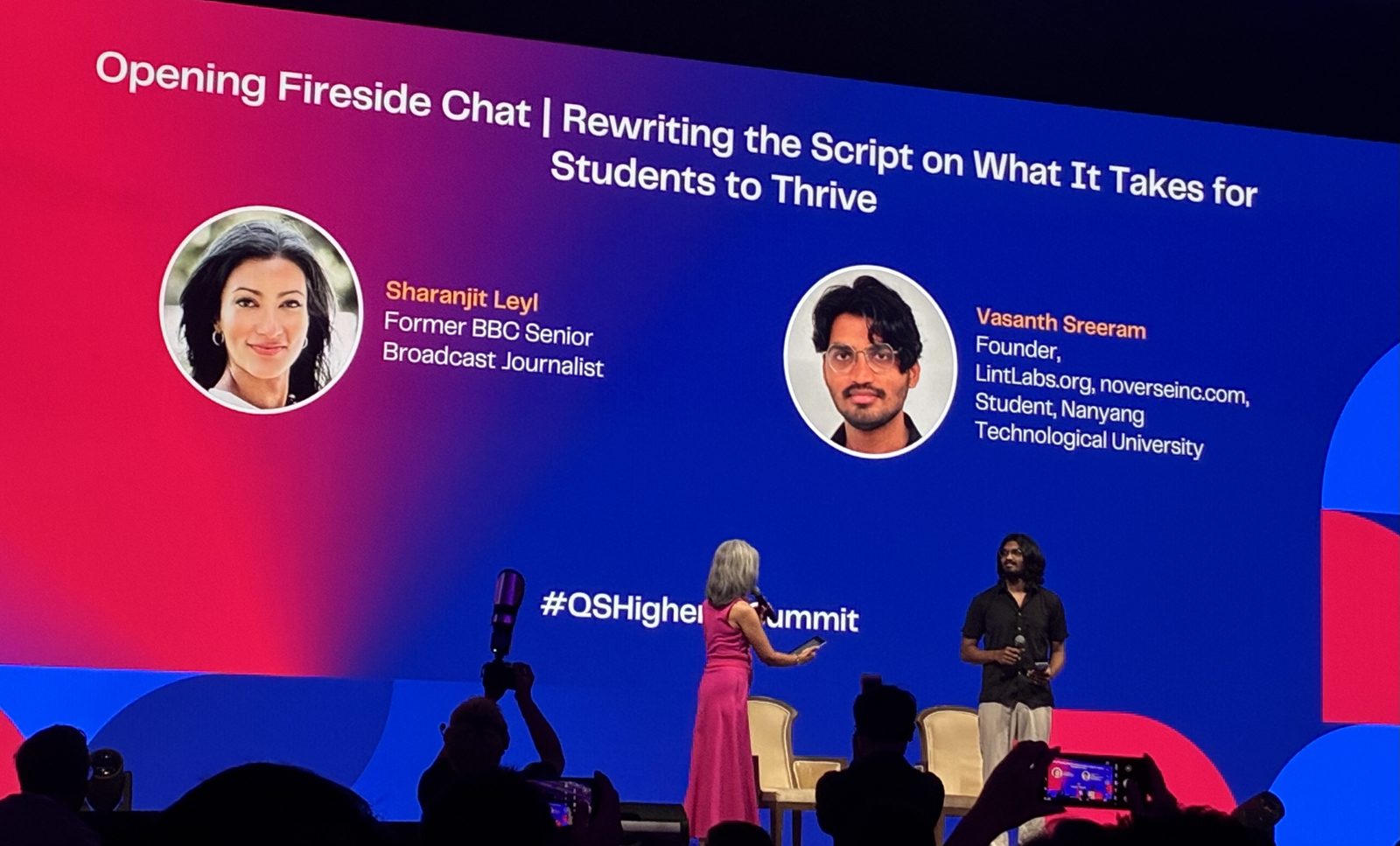
Moderator Sharanjit LEYL, Chancellor of Bath Spa University and a former BBC senior broadcast journalist, introduced Vasanth, Founder of LintLabs.org and noverseinc.com and a student at NTU, as "an inspiring student, who I believe has a lot to teach all of us". He described how he came to take charge of his own education: "I learned better by myself than somebody forcing me to basically learn."
His first point was about learning on real systems. The school sandbox, he argued, "may not be the most effective way of understanding how real life systems actually behave." His remedy, which he admitted might sound controversial coming from a student, was to "give much harder projects… that are real world pressing systems", citing an MIT course in which groups were challenged to build a jet engine within a month.
Harder work only helps if students feel safe to attempt it, which led to his second point: a human-centred, safe-to-fail culture. Universities should design their sandboxes so that "the learning will be the priority, not just checking checklists or boxes". He credited Prof Lerwen LIU with openly sharing her own mistakes, which helps students "approach the professors as humans, and not like somebody who is above them and cannot be questioned."
His third point looked ahead to human accountability in the age of AI. Rather than asking what AI can do, he urged the audience to ask, "what are the things that AI can't do?" His answer was clear: "accountability is one of the main things that cannot be automated, and it still has to lie back to the humans."
He closed on a reminder that applies to every discipline: "as humans, we still have to communicate with humans."
What it means for HCSREL
These three points also describe how HCSREL works.
On learning on real systems, HCSREL's systems-thinking and challenge-based sustainability education puts students to work on real green-transition and circular-economy problems, not textbook exercises.
On a human-centred culture, the principle is in the lab's name: the Human-Centred Sustainability Research & Education Lab. Hearing that culture cited on the summit's main stage, by one of our own members, shows it in practice.
On accountability and impact, the lab's work in Sustainability Impact Assessment, including life cycle assessment (LCA), gives people who take green-transition decisions a rigorous way to show their impact. That is the evidence Jessica TURNER said universities must now demonstrate, and what Prof Badri Munir SUKOCO called the proof.
Rankings open the door; impact is the proof
The summit began with a reminder that rankings bring the credibility to lead, but impact is the proof of having led well. From the main stage, Vasanth showed what that proof requires of students: real systems, a human culture and accountability. HCSREL will keep training students to deliver it.